
Criminal Case: Pacific Bay
Pretty SimpleAdventure
4.79.63K Reviews
- Version
- 2.45.1
- Installs
- 10.00M
- Age Rating
- Teen
Screenshots
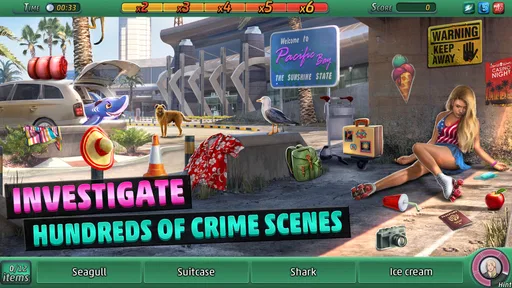
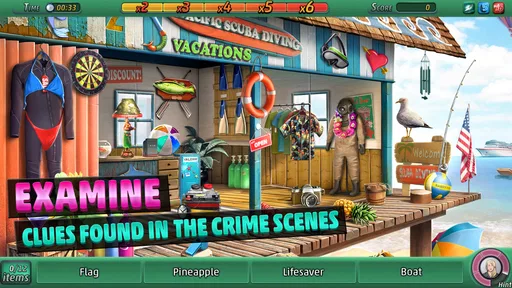

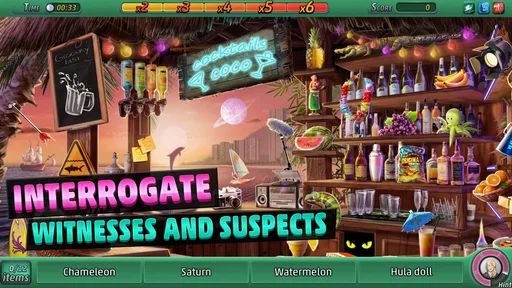
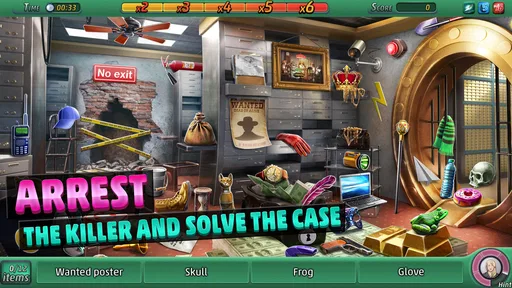
Our Review of Criminal Case: Pacific Bay
 Analysis by Appyee
I approached Criminal Case: Pacific Bay expecting a light hidden-object game, but its appeal is broader than simply tapping through crowded scenes. It combines visual searches with a continuing police investigation, so each solved scene feels like a small step toward understanding a case rather than an isolated puzzle. My overall view is positive: this is an easy game to pick up, especially when I want short sessions with a little story attached, although its energy-based rhythm and repeated search structure will not suit everyone.
Developed by Pretty Simple, this free adventure game has built a substantial audience, with a 4.7 average from around 251 thousand ratings and more than 10 million installs. Those figures make sense after spending time with it. The presentation is approachable, the basic objective is immediately clear, and the Pacific Bay setting gives the investigation a recognizable identity. Still, popularity does not remove the need to understand its limits. The game works best when I treat it as a casual investigation to dip into, not as a deep detective simulation or a completely uninterrupted adventure.
How the Pacific Bay investigation works
The central loop is straightforward. I examine a scene, look for listed objects, collect clues, and use those discoveries to move the investigation forward. That simplicity is one of the game’s strongest qualities. I do not need a long tutorial or a complicated control scheme before I can begin. The challenge comes from observation, memory, and recognizing objects that may be partially hidden among the scene’s visual clutter.
What gives the searches more purpose is the case structure around them. Instead of solving unrelated pictures forever, I am encouraged to think about how each discovery fits the current investigation. The story layer is not as elaborate as a full adventure game, but it gives the object hunts a reason to exist. When I am playing casually, even a short session feels more satisfying because it ends with progress rather than just a score.
The Pacific Bay theme also helps distinguish the game from a generic collection of hidden-object boards. The setting creates a consistent atmosphere and supports the feeling that I am moving through one connected crime-solving world. I would not call the writing the main attraction, but it provides enough context to make the next scene feel relevant. Players who enjoy light mysteries, colorful environments, and episodic progress will probably connect with that balance quickly.
Why the search scenes remain engaging
The best moments come when I stop scanning randomly and start using a method. I usually read the object list first, group similar items mentally, and then sweep the scene from one side to the other. That approach is faster and less frustrating than jumping around whenever I notice a familiar shape. It also makes the game feel more like observation than pure luck.
A useful detail is that the object list changes the way I look at a scene. I am not only searching for obvious items; I am also watching for unusual colors, partial outlines, and objects blended into the background. Once I learn the visual style of the game, I become better at predicting where an item might be placed. This creates a small but rewarding sense of improvement, even though the basic interaction stays simple.
I also recommend slowing down when the scene feels crowded. Tapping quickly may seem efficient, but careless guesses can make the search less comfortable and can reduce the satisfaction of finding an item through careful observation. My better sessions happen when I treat each board as a visual puzzle instead of a race. That is one of the game’s less obvious strengths: it rewards a calm routine more than frantic tapping.
Progress, pacing, and the free-to-play trade-off
Because the game is free to download, its pacing is designed around returning regularly rather than completing everything in one long sitting. In-app purchases range from $0.99 to $99.99 per item, so I would advise deciding early whether I am comfortable playing within the free rhythm. The game is much easier to enjoy when I do not view every delay as something that needs to be bypassed.
For me, the energy system is both useful and restrictive. It naturally limits how long I can search in one sitting, which suits a commute, a short break, or a few minutes before bed. On the other hand, it can interrupt the exact moment when I am invested in a case. If I want a game for a long uninterrupted evening, this is not the most convenient choice. The free structure is manageable for casual play, but patience becomes part of the experience.
That pacing also changes how I approach difficult scenes. Rather than forcing myself through a board when I am tired, I prefer to stop and return later with fresh attention. This is practical because hidden-object games become noticeably harder when I am distracted. The game is therefore better as a repeated daily habit than as a single marathon session.
The current version is 2.45.1, and the game supports devices running Android 7.0 or later. On a compatible phone, the controls are simple enough for touch play without demanding special hardware. The Teen content rating is worth noting for families: this is not a preschool-style seek-and-find title, and the crime-investigation framing makes it more appropriate for older children and adults than for very young players.
What stands out after extended play
The strongest evidence in the game’s favor is how quickly it creates a usable routine. I can open it, understand what needs doing, complete a scene, and leave without remembering a complicated set of systems. That makes it particularly effective for players who like the idea of mystery games but do not want demanding controls, long battles, or a large map to manage.
It is also more approachable than many traditional adventure games. There is no need to master character movement or solve every puzzle through trial and error. The main skill is visual attention, supported by the case progression. In practical terms, I can play while relaxing on the sofa, during a short waiting period, or when I want something interactive but not mentally exhausting.
Another strength is the way the game turns familiar objects into small moments of recognition. Finding an item that was visible all along can be more satisfying than locating something placed in an obvious position. I found that the game encourages me to inspect backgrounds more carefully, a habit that carries over into later scenes. That gradual improvement is subtle, but it gives the repeated format a reason to continue.
The investigation framing also helps with motivation. If the game consisted only of object lists, I would be more likely to stop after a few scenes. The cases provide a reason to return, while the Pacific Bay setting gives the separate searches a shared identity. Players who enjoy light narrative between puzzle sections may find this more compelling than a pure hidden-object collection.
Where the design starts to show its age
The meaningful weakness is repetition. The core activity remains searching scenes for objects, and no amount of story can completely hide that fact. When I play for too long, the differences between scenes matter less than the similarity of the task. The game is strongest in short bursts; extended sessions can make the formula feel mechanical.
The energy-based structure adds another layer of friction. It can be useful for keeping the game relaxed, but it also means my progress is not governed only by interest or skill. I may know exactly what I want to investigate next and still need to wait or consider an in-app purchase. That is not unusual for a free mobile game, but it is important to recognize because it can affect how satisfying the story feels.
There is also a tension between accuracy and speed. Some players will enjoy trying to improve their search performance, while others may feel pressured by the scoring approach or by the need to locate objects quickly. I prefer focusing on steady progress, because chasing perfect results can make the scenes less relaxing. The game is not at its best when I turn every board into a test of reflexes.
Players seeking a serious detective experience should adjust their expectations. The game uses crime as a framework for accessible puzzle play, not as a detailed simulation of real investigative work. I am not making complex deductions from evidence in the same way I would in a dedicated narrative mystery. The satisfaction comes from finding objects and advancing through cases, so someone looking for branching choices, extensive exploration, or sophisticated logic puzzles may prefer a different adventure title.
Practical ways to get more from each session
My most effective approach is to divide a session into three stages. First, I scan the entire scene without tapping, which gives me a rough map of colors and crowded areas. Next, I search in a consistent direction and collect obvious objects. Finally, I return to the difficult areas with the remaining list in mind. This prevents the common mistake of staring at the same corner without changing strategy.
I also avoid spending resources simply because I am impatient. If a scene is becoming frustrating, leaving it and returning later is often better than making rushed attempts. A fresh look can reveal an item that was hidden by visual overload. This matters especially for players who want to keep the game free, because patience reduces the temptation to use purchases as a shortcut.
For a more comfortable everyday routine, I would play one or two scenes during a natural pause rather than opening the game with the expectation of finishing a whole case. That matches the game’s pacing and keeps the repeated searches from becoming tiring. It also makes the story easier to remember, since each return has a clear purpose instead of blending into a long session.
Another useful habit is to reserve the game for moments when I can give it visual attention. It is not ideal background entertainment while watching television, because the challenge depends on noticing small details. If I am distracted, I tend to miss obvious objects and blame the scene for being difficult. In reality, the game rewards focused but relaxed play.
Who should play it, and who should look elsewhere
I would recommend it to anyone who enjoys hidden-object puzzles with a light crime narrative and prefers mobile games that can be played in short sessions. It is especially suitable for players who like clear goals, colorful investigation scenes, and gradual progress without complicated controls. The free entry point makes it easy to try, and the large existing audience suggests that its basic formula has broad appeal.
It can also work well for someone who wants a low-pressure way to practice visual attention. The game does not demand advanced gaming experience, and the interaction is easy to understand. A parent considering it for an older child should remember the Teen rating and the crime-focused setting rather than treating it as a general family puzzle game.
I would not choose it for a player who dislikes waiting, wants a completely uninterrupted campaign, or prefers deep deduction over object searching. It is also a poor match for someone who becomes frustrated by repeated scenes or feels uncomfortable with optional purchases in free games. In those cases, a paid hidden-object adventure with a fixed structure may offer a better experience, even if it has less ongoing content.
Compared with a pure puzzle app, this game gives me more reason to return because the cases connect the scenes. Compared with a full adventure game, it is lighter, more guided, and less demanding. That middle position is its real niche. It offers enough narrative to make the searches feel purposeful, but it never stops being a casual object-finding game.
One question many new players will have is whether spending money is necessary. In my experience, it is possible to approach the game as a free player if I accept its slower rhythm and use the available sessions carefully. Purchases may make progress more convenient, but they do not change the basic nature of the game. The important decision is whether I enjoy the search loop enough to play at its intended pace.
Another practical question is whether it is suitable for quick play. Yes, that is where it fits best. A single scene can provide a complete small activity, while the wider case gives me a reason to return later. It is less satisfying when I expect the game to replace a long console-style adventure, but it works well as a compact mobile diversion.
My verdict on the Pacific Bay formula
Criminal Case: Pacific Bay succeeds because it understands the value of a simple loop with a clear reason to continue. The hidden-object scenes are approachable, the investigation theme adds context, and the Pacific Bay setting gives the experience more personality than a disconnected puzzle collection. Pretty Simple has made a game that is easy to start and easy to fit into ordinary routines.
My recommendation comes with one clear condition: enjoy it in measured sessions. The repeated searches and energy pacing become noticeable when I try to push too far, but they are much less troublesome when I play for a few minutes, solve what I can, and return later. The optional purchases also make patience important for anyone who wants to keep the experience free.
With its 4.7 average, 10M+ installs, free price, and Teen rating, the game is a strong choice for older players who want casual mystery entertainment rather than a demanding detective simulator. I would install it for short, focused puzzle sessions and a continuing case atmosphere. I would skip it only if I needed unlimited play, complex deduction, or a story that depends more on choices than on finding objects.
My final take: this is a polished, accessible adventure for hidden-object fans, with enough investigative flavor to keep the routine meaningful. It does not reinvent the genre, and its free-to-play pacing can test my patience, but it delivers exactly the kind of compact, story-supported searching that works well on a phone. For the right player, that focused simplicity is the reason to come back.
Verdict
Strengths of Criminal Case: Pacific Bay
- Fun hidden-object scenes with varied locations and crime cases.
- Short investigations make it easy to play during quick breaks.
- Colorful visuals and a lighthearted presentation suit casual players.
- Regular rewards help maintain progress without constant purchases.
- Simple controls work well on both phones and tablets.
Limitations of Criminal Case: Pacific Bay
- Energy limits can interrupt investigations when you want longer sessions.
- Some evidence searches feel repetitive after extended play.
- Later cases may require patience or premium currency to progress.
- Frequent prompts can encourage spending on boosts and extra energy.
- An internet connection may be required for several game features.
Other Releases by Pretty Simple
View All
Criminal Case
Adventure4.6

Criminal Case: Save the World!
Adventure4.7

Criminal Case: Mysteries
Adventure4.6

Criminal Case: The Conspiracy
Adventure4.7
Similar Picks in This Category
View All
Roblox
Roblox Corporation4.2

Pokémon GO
Niantic, Inc.3.5

Ninja warrior: legend of adven
TOH Games4.6

Ninja Arashi
Black Panther4.6

Eyes - The Horror Game
Fearless Games sp. j.4.5

Critical Action:Gun Strike Ops
FPS Shooter & Action Game4.3
Frequently Asked Questions
What is Criminal Case: Pacific Bay?
Criminal Case: Pacific Bay is a hidden-object adventure game in which you investigate murders and other crimes in a fictional tropical setting. You examine crime scenes, search for clues, question suspects, analyze evidence, and gradually uncover the story behind each case. The game combines investigation gameplay with dialogue, character progression, and episodic mysteries.
Is Criminal Case: Pacific Bay free to download and play?
Yes, Criminal Case: Pacific Bay can generally be downloaded and played for free on supported Android and iOS devices. However, it includes optional in-app purchases that may provide energy, coins, boosters, or other conveniences. Progress is also limited by energy and waiting periods, so players who want faster advancement may encounter purchase offers during regular gameplay.
Does the game require an internet connection?
An internet connection is usually required for the best experience because the game may need to synchronize progress, load advertisements, process purchases, and access online features. Some previously loaded sections might appear to work temporarily offline, but this is not guaranteed. Connecting regularly can also help prevent progress problems when changing devices or reinstalling the application.
Is Criminal Case: Pacific Bay suitable for children?
Although the game uses colorful graphics and a casual puzzle format, its main theme involves murders, investigations, suspects, and crime scenes. The presentation is not designed as a realistic crime simulator, but some story elements may still be unsuitable for younger children. Parents should review the store age rating, in-app purchase settings, and the game's advertising before allowing children to play.
What are the main limitations players should know before downloading?
The game is enjoyable for players who like searching for objects and following mystery stories, but its energy system can interrupt longer sessions. Replaying scenes to earn higher scores may also become repetitive, while advertisements and optional purchases can affect the pace. Device compatibility, available storage, and account synchronization should be checked before downloading, especially on older phones or tablets.
Play our best games!


